E27 or E14? How to tell your socket
Guide · Published · LumaForm
E27 and E14 are the two screw sockets found in almost every home in continental Europe. The E stands for Edison, the number for the diameter of the thread in millimetres. E27 is the normal, large socket, E14 the slim one.
The difference at a glance
| E27 | E14 | |
|---|---|---|
| Thread | 27 mm | 14 mm |
| For comparison | slightly wider than a 2-euro coin | slightly narrower than a 1-cent coin |
| Typically in | pendant lights, ceiling lamps, floor lamps and most table lamps | bedside and wall lights, chandeliers, small table lamps |
| LED bulbs | wide choice, including very bright ones | mostly smaller, more for cosy light |
Find out what you have in ten seconds
- Look at the bulb. The base or the packaging almost always says “E27” or “E14”.
- Compare it with a coin. If the thread is about as wide as a 2-euro coin, it is E27. If it is closer to a 1-cent coin, it is E14.
- Look at the socket. On pendant lights, the plastic or metal body the bulb screws into is clearly thicker than a thumb for E27, and about thumb-thick for E14.
Switch off the power first and let the bulb cool down before you unscrew it.
What this has to do with the lampshade
A lampshade does not hang from the bulb but from the socket. That is why the hole in the shade or its holder has to fit the socket, not the bulb. A shade made for E27 simply slips over an E14 socket, and a shade made for E14 does not fit over an E27 socket.
Adapters from E27 to E14 exist, but they only change which bulb fits into the socket. For the shade, the socket itself still counts.
Other bases such as GU10, G9 or bayonet (B22) are something else. Shades for E27 and E14 do not fit them.
Which bulb belongs in the shade?
- Always LED. LEDs stay cool. Incandescent and halogen bulbs get far too hot for a thin-walled shade.
- Warm white (2700 kelvin) for living, dining and bedrooms.
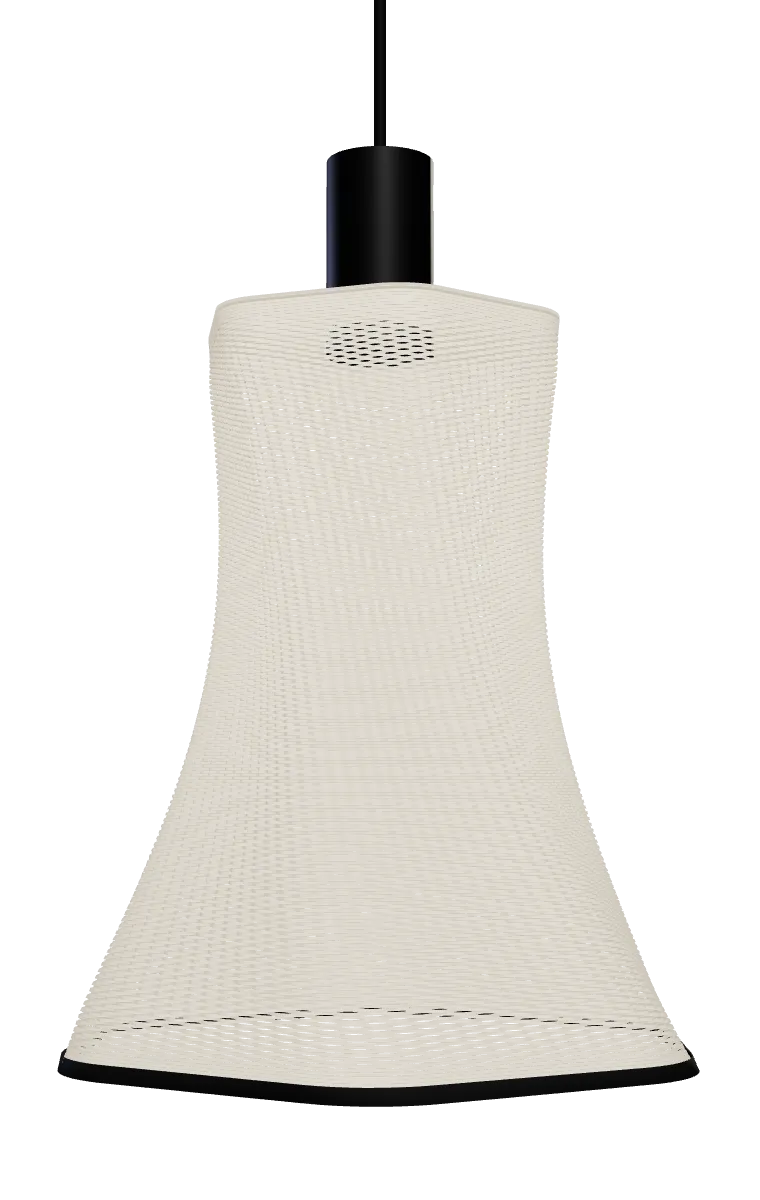
- Frosted or opal glass if you look up into the shade from below, for example over the bed. With patterned or basket-weave shades, clear vintage-style LED bulbs make the pattern glow especially crisply.
- Brightness by location: around 400 to 500 lumens for accent and bedside light, 800 lumens and more for a shade over the table.
How we do it
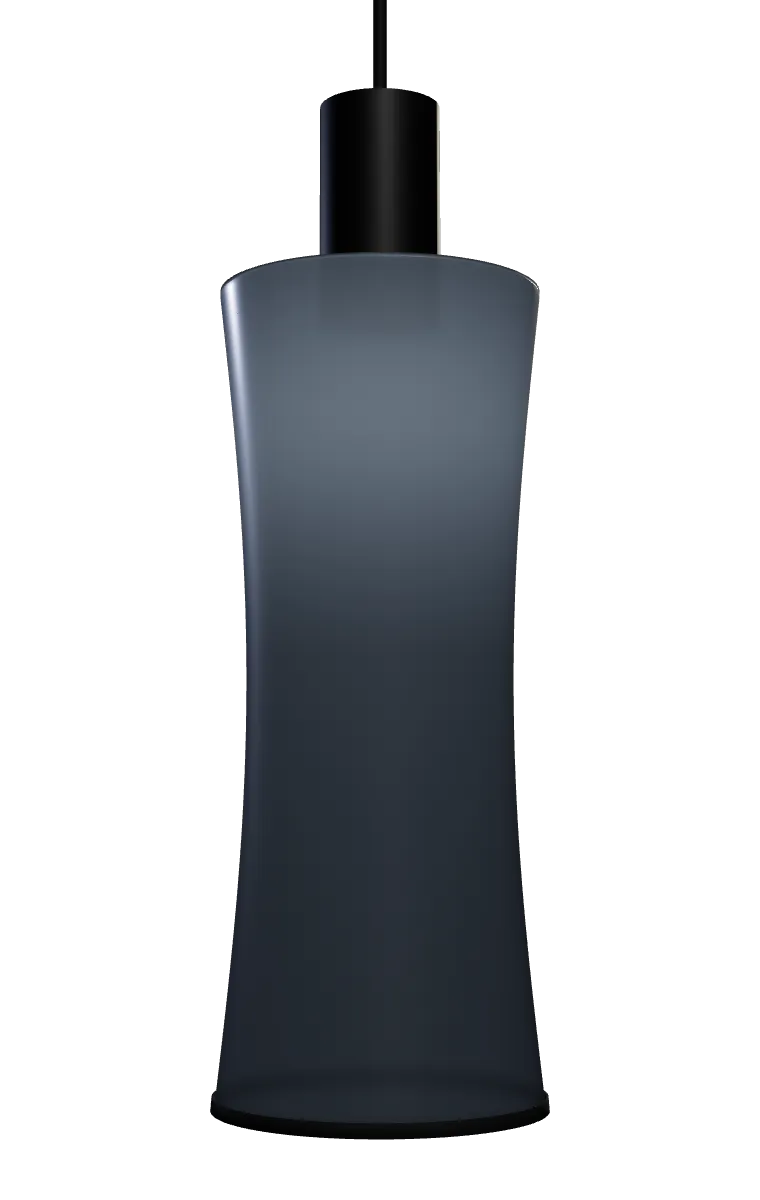
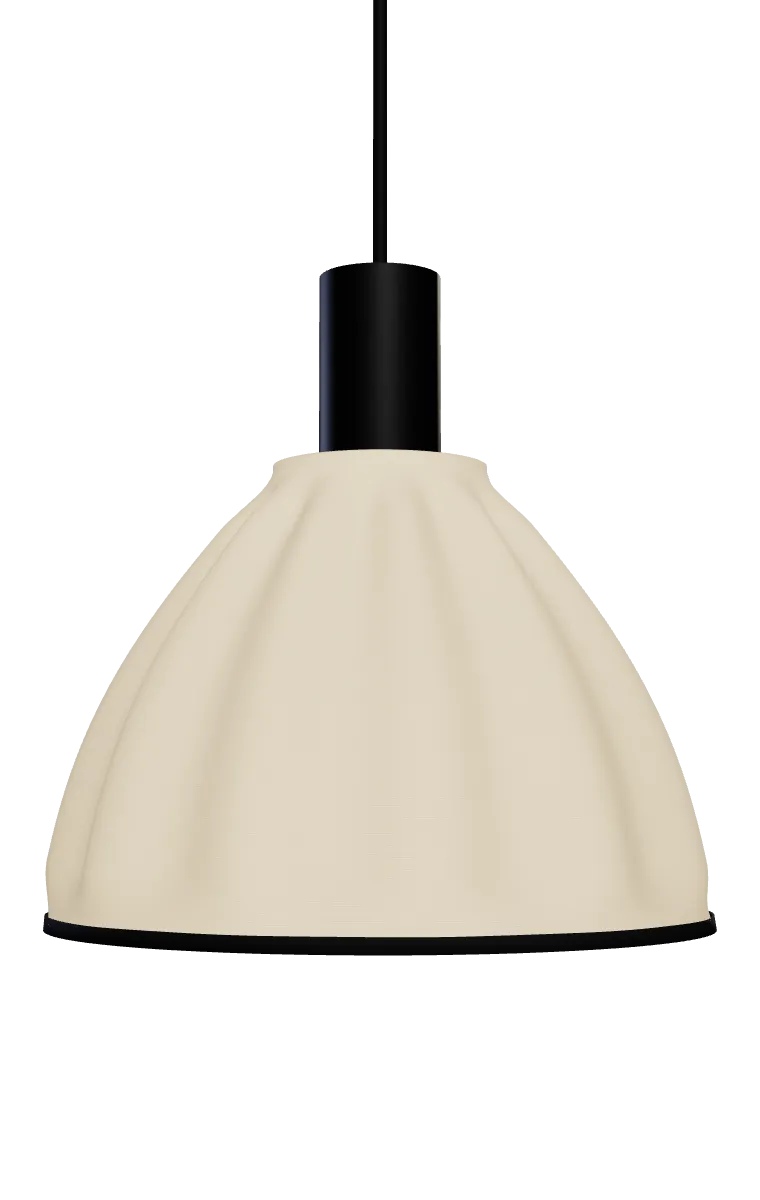
Every LumaForm lampshade is made for pendant lights with an E27 socket and shade ring (41 mm hole). Not every socket has a shade ring. That is why we recommend the IKEA HAVSDJUP pendant fitting, which you can add when you order. The bulb is not included.
Read next: Which shade size for which room? · Frequently asked questions